Loading Donald Lena…
Contractor workflows · Estimating
From Construction Drawings to Two Clear Trade Proposals
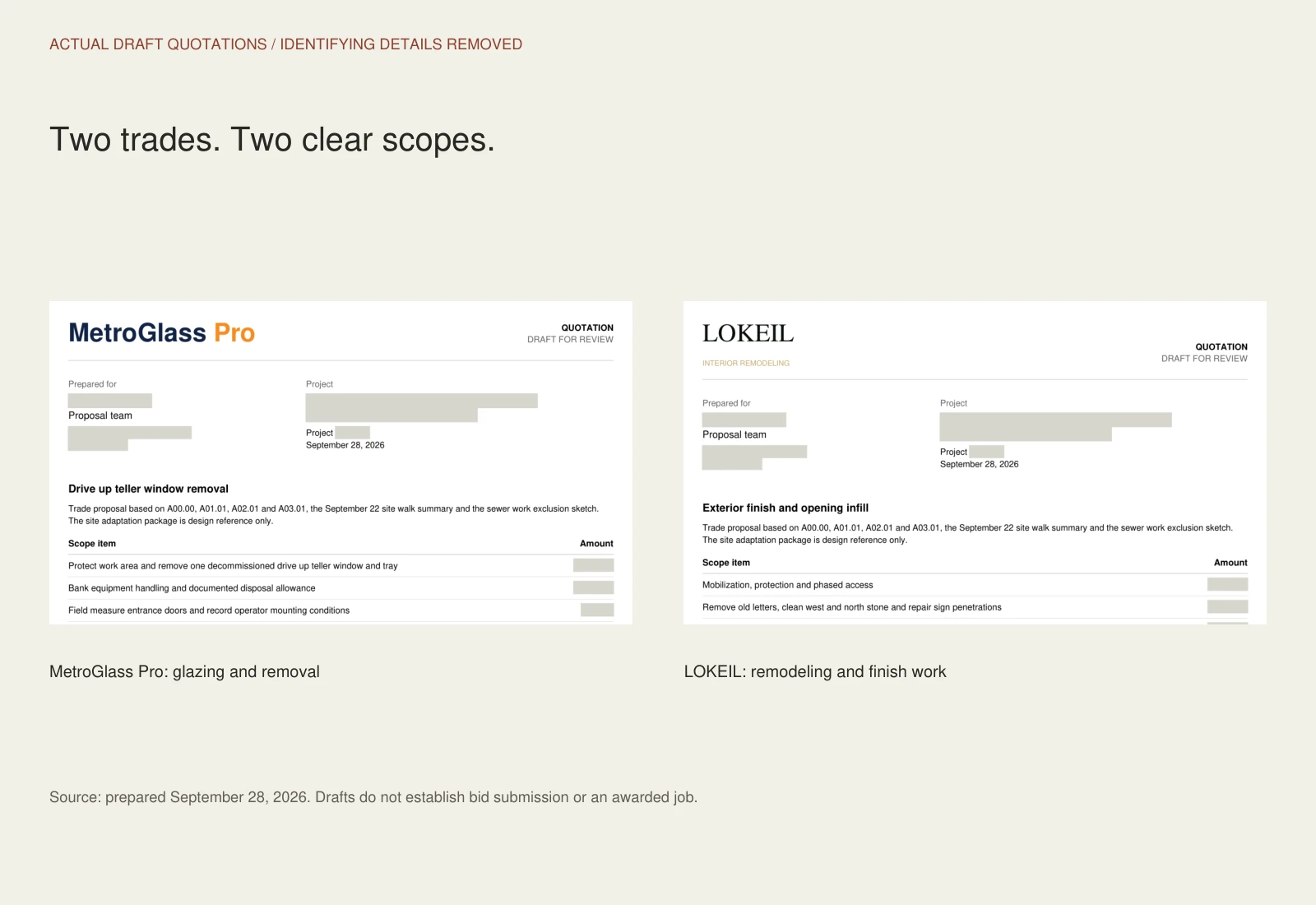
The request was for construction quotations and a schedule of values. The first job was to understand what the drawings actually assigned to each trade. I prepared separate MetroGlass Pro and LOKEIL proposals so the scope, exclusions, and pricing stayed readable.
Choose the governing documents
The source material included a construction drawing package, an older design reference, a site-walk summary, and a work-exclusion sketch. Those documents did not have equal authority. I used the governing construction drawings for scope and the later written clarifications for conditions affecting the work.
The site-walk notes also identified limits in the existing survey information. That meant drawing measurements could not be treated as a final field takeoff. The quotation needed to preserve those limits rather than turn an uncertain quantity into an apparently exact promise.
A useful estimating workflow records which document supports a scope item and which assumption still needs confirmation. That keeps the estimate understandable after the first review.
Separate glass work from finish work
The drawings showed coating work on existing storefront frames and doors, rather than a new storefront glass package. The distinct glazing-related task was removal of a decommissioned teller window and tray. The opening then needed infill by the appropriate trade.
The MetroGlass Pro proposal covered its own removal and related scope. The LOKEIL proposal covered the separate opening-infill and exterior-finish work. Keeping those quotations separate made the responsibility at their shared opening easier to see.
The proposals also recorded vendor boundaries. Sign work and automatic door operators belonged to other vendors. The existence of those items on a drawing did not make them part of either quotation.

Make exclusions useful
An exclusion should answer a likely scope question. Here, civil and electrical work, signs, and other separate-vendor items needed to stay outside the two trade quotations. The sewer exclusion area also affected where work and staging could take place.
Access conditions belonged in the review as well. The source notes required continuing access to the entrance and part of the operating site. A line item alone would not explain those constraints to someone planning the work.
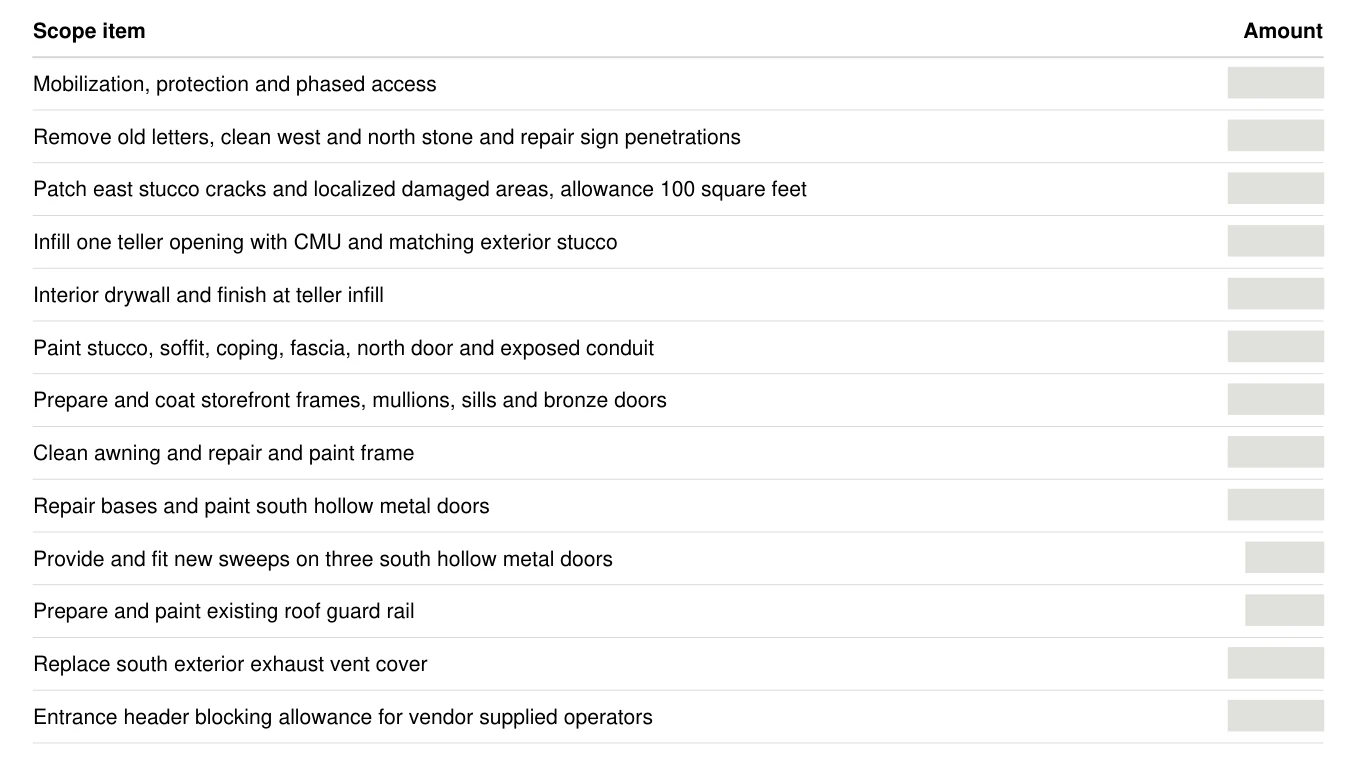
The estimates used allowances where the available information did not support a binding measured quantity. Those allowances still required field and trade confirmation. The public excerpts leave out customer information, quoted amounts, and private estimating methodology.
The workbook is part of the bid
Alongside each PDF quotation, I prepared a draft schedule-of-values workbook in the requested format. The workbook organizes the priced scope for the bid-return process; it is not evidence of a signed contract.
The remaining review included company-specific details, labor status, who would perform the work, signatures, and technical assumptions. Those items had to be resolved before the documents could serve as a completed bid return.
The receipts in this article are from the prepared drafts. They do not establish submission, acceptance, an awarded contract, or completed construction. The story is the document workflow: how the available drawings became two clear, reviewable proposals.
A good trade proposal makes responsibility visible. The scope, exclusions, supporting documents, and open assumptions should agree before the quote leaves the business.
Have a workflow that needs a clearer next step?
Tell me what you’re working on ↗